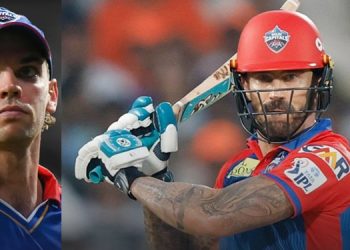
IPL stands for the Indian Premier League. It is the biggest cricket carnival on the planet. With the rising popularity of cricket and foreign players’ active participation, IPL has become India’s adopted festival. It started in 2008, and it gets better every year with some changes in IPL auction rules. IPL player auction is crucial because the fate of many Indian and foreign players are associated with the league. Irrespective of IPL player auction categories, some unpredictable nature may lead an unknown domestic player to bag a million-dollar deal.
On the other hand, many established foreign players go unsold. IPL player auction is the event conducted by BCCI for all the franchisees. There will be an auctioneer who controls the proceedings on the auction day. The auction ends with a ready-to-go IPL auction player list for every franchise.
The factors like budget, player’s international commitment, injury history, recent performances, type of player required, and the IPL auction rules, play a role in IPL auction. We will cover how the IPL auction works, IPL player retention policies, IPL player auction categories in detail.
How Does the IPL Auction Work?
It is very interesting if you will try to understand how does the IPL auction work. In an auction, team management, managers, coaches, analysts sit together around a table and bid for players they planned earlier. IPL player auction is broadcasted on television in real-time. The team that wins the bid buys the players, according to IPL auction rules. Each team has 85 crores to fill their squad of 25 members. Teams can retain the players from the previous seasons if they want. After retention, the budget left is the amount they are going to spend during the auction.
Each team’s strategy of recruiting players is different. Sunrisers Hyderabad and Kolkata Knight Riders retain 22 and 17 players, respectively, out of 25 players from the last season. Mujeeb-ur-Rahman and Kedar Jadhav are the only two players SRH bought in the 2021 auction. However, Punjab Kings retained 16 out of 25 players with 31.8 Crore. That’s the big reason they bought Shahrukh Khan, Jhye Richardson, Dawid Malan, Riley Meredith by spending a huge amount. Selected 292 players have set their base price – the price from which bidding will start. Therefore, each team tries to fill their batsman, bowler, batting all-rounder, bowling all-rounder, and wicketkeeper spot with the best players available.
The budget allocated to Each Team
INR 85 Crore is the amount given to every franchisee to make their 25 members squad. This 25 member squad consists of capped, uncapped, and foreign players. CSK used 79.85 Crore, and their foreign player quota also filled. So they can’t buy any players. Despite some expensive buys, Punjab Kings still have 16.5 Crore in their purse. All the teams are bound to spend 60% of the 80 Crore, i.e. 60 Crore, in the auction process.
Categories of IPL Player Auction
Majorly, there are three types of IPL player auction categories.
- Uncapped Indian players
- Capped Indian players
- Overseas players or foreign players.
Capped Indian players have already represented team India senior’s team in any cricket format at least once in their life. India’s uncapped players are those who play domestic cricket(first-class) but never represented India.
Overseas players are non-Indian foreign players who may be capped or uncapped or maybe a player from associate cricket-playing nations. It is important to note that Under-19 players can’t be considered in the uncapped category unless they have played some first-class matches. IPL auction player list comprises many players, but only a few can make the final list to go under the hammer. A team can have a maximum of eight foreign players in the squad, and four foreign players can be played in a match.
How Many Players are Required in the Team Squad?
Team squad varies between 18 to 25. There can be a maximum of 8 foreign players in the squad. For example, a franchise has 25 players. So 17 out of them must be capped or uncapped Indian players and eight overseas players. Few overseas players whose contribution was phenomenal in the past were AB Devillers, Kieron Pollard, Andre Russell, Jofra Archer, Chris Gayle, David Warner, Rashid Khan and many more. If there is a foreign player spot available, and purse allows, a team can spend a huge amount on foreign players. IPL player auction is incomplete without the surprising buy of some foreign players as they are the game-changers.
What are the Player Retention Policies in IPL?
An IPL team is allowed to retain only a limited number of players of the team, according to IPL player retention policies. According to Right-To Match(RTM) policy, teams can retain up to five players before the auction. Pre-auction retention includes up to three Indian capped players, two foreign players, two uncapped players. There is a salary deduction that players have to undergo if their team retains them. The three salary bars are INR 15 Crore, 11 Crore, and 7 Crore. IF a team retains two players, the salary deduction will be INR 12.5 Crore and 8.5 Crore, respectively. In the case of an uncapped player, the salary deduction will be INR 3 Crore.
How do IPL owners earn money?
IPL is a business for all the franchises, along with some competitive cricket. The investment in players turns to be either a great investment or a disaster. Let us discuss the source of income of IPL owners.
1. Title Sponsors
The Chinese technology giant Vivo is the title sponsor for IPL until 2023, along with other official sponsors such as Jio, Goibibo, Dream11, to name a few. BCCI earns a lot of money from these sponsors. BCCI earns a significant amount of money from the sponsorship. The Chinese mobile company Vivo is now the title sponsor for IPL till 2023. There are other official sponsors like Dream11, Unacademy, Cred, Goibibo and so on. Around 60% of the money coming from these sponsorships are distributed among all eight teams equally.
2. Team Sponsors
Apart from the title sponsor, there are separate sponsors for each IPL team. If we take Royal Challengers Bangalore as an example, Myntra, Puma, Wrogn, Muthoot Fincorp, Valvoline are few sponsors. You can see their names on the jersey of payers. Team sponsors create a huge source of income for the franchises.
3. Home Games
Each franchise is assigned a home ground. For example, Chepauk Stadium is the home ground of Chennai Super Kings, Chinnaswamy stadium is the home ground of Royal Challengers Bangalore. The money coming from tickets in home games is another source of income for the owners.
4. Merchandised products
You can find many people wearing yellow during a CSK game or a sea of blue in a MI match. Fans buy merchandised t-shirts. Apart from t-shirts, they also launch smartwatches, mobile cover, bag pack, and many more. Merchandised products are one of the sources through which IPL owners make money.
5. Other sources
The champions get INR 20 Crores which may seem less compared with other sources of income. Franchises also earn through player trading, which rarely happens.