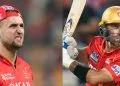
In the 17th century, when cricket started in England, the players used a different kind of bat. Since then, there have been several changes in the shape and size of a cricket bat. They played with a cricket bat curved like a hockey stick, unlike the straighter ones we currently use. Throughout these years, with the changing rules of cricket, the bat has gradually evolved into a different shape that we use today. Sometimes, it is very hard to imagine those days when they used to play with those hockey stick-type bats. The story of cricket bat evolution is spectacular.
Initially, people used to use cricket bats that were made from a single piece of wood. Have you ever played with a bat in which every ball hit on the bat directly connected to the handle? It creates a nasty vibration that can injure you. Moreover, it will be very awkward to play with this weak cricket bat when a fast bowler bowls.
Therefore, the cricket bat was made from a cane handle during the end of Victoria’s era. The handle part was spliced into the willow (main part), which was designed, pressed, and shaped carefully to generate maximum power and proper balance for the batsman. Thus we have witnessed the cricket bat evolution since the start of this game.
How Are Cricket Bats Made?
Most cricket bats are made by hand, so the cricket bat curved can be done precisely. Bat makers usually use Salix Alba or White willow. These can be carved into a perfect shape to make a cricket bat. Most cricketers use English Willow cricket bat rather than Kashmir Willow wood because the former is lighter than the latter.
Now we will try to understand the reason behind cricket bat curved. Manufacturing ways play a role in making a perfect cricket bat. But the bat makers focus on the straightness of grains in their willow piece and the distance between those. These factors will help you understand the logic behind whether it’s a grade 1 or grade 4 quality. The grading system is measured in terms of look, weight, grain density, and direction. However, it doesn’t guarantee you a promising performance.
Process of making Cricket Bat
The cricket bat made it possible for bat makers to control the grade quality. So, all the credit goes to the brilliant craftsmanship of the bat makers. The process involves pressing it properly as the first step. As a result of high pressure, the wood begins to shape in the desired format. And the final curved shape is genuinely performed to make the wood springier and stronger whenever the ball touches the bat’s surface.
Once the pressing is done, the handle is spliced into the main piece of a bat with force. As a result, bat makers job become easier for carving and shaping. Then they remove the unnecessary part of the bat, which means removing a structurally unimportant part that has nothing to do with the bat’s potential and power.
That’s the significance of a curved bat, which results from several stages of making a cricket bat. The combination is vital in shaping the bat so that it bows from top to bottom. All these decorations you see are not done for aesthetic reasons only. Cricket bat made after considering many practical impacts. And that curve you see has a lot to do with playing varieties of shots effortlessly.
How Important is a Good Curve?
The curve reduces the weight in the rear of the bat while also improving the overall structure. It also maximises the potential power of a shot when the bat hits the ball. With minimum efforts, players can easily hit the ball with a cricket bat curved with minimum efforts. A good curve is crucial as it can reduce the weight in one end of a cricket bat.
What is the Impact of the Curve on a Cricket Shot?
If you try to understand the nuances behind a cricket bat shot, you will figure out it’s the combination of batsman’s ability and bat’s supremacy. The most important reason behind the curvature is helping players to play difficult shots better. Striking the balls without that slight curve at the toe wouldn’t be possible.
For example, Hardik Pandya plays a late uppercut or a hook. He can do that because that curve allows him to direct the ball in his wish. Flicking a ball all over the ground(flick through the leg-side, cut towards the third-man area) is possible due to the fine art of a curved cricket bat.
The scenario is slightly different while you play defensive cricket. The curve creates an angle from which the ball bounces towards the ground when you try to play a defensive shot. Thus, a batsman’s every shot can be demonstrated to find out the utilisation of the bat’s curvature.
Why is the back of the Cricket bat curved?
A bat has a slight bend in both front and backside. The shape of the cricket bat’s backside, with the edge that runs down the middle and follows the bent shape from the handle towards the toe, is significant in making a solid focal construction.
This ‘swell’ or “ridge” is the place where the bat has the maximum power. There could be no greater sound in a cricket bat shot than when the ball strikes this spot and goes for a six.
As a rule, the meatier the bat, the longer your shot will go. The quality of wood in which a cricket bat is made also matters. However, if a bat has no curvature and only thickness, the weight distribution would be very awkward. As a result, one can’t bat properly.
What and Where is the Sweet Spot?
This is the part where we will let you know some technical concept. There is a term called “sweet spot”, or we generally use “middle”. This spot in the bat is the combination of curve structure and weight distribution. This “middle” of a bat falls somewhere around 7 to 10 inches from the toe of a bat. ” Virat Kohli middles it for a six on the mid-off” – You must have heard similar commentaries in cricket. “Sweet spot” is a place where every batsman wants to hit. A middle of the bat can easily lead the ball out of the park or a cracking four. You will hear a sweet sound if a batsman middles a ball.
There are different physics applications behind this “sweet spot” concept and its impact on a cricket bat’s vibrational characteristics. There are different types of sweet spots named high positioned sweet spot, low positioned sweet spot, and middle positioned sweet spot. The vibration will be least when a ball strikes on this “middle” part of a cricket bat.
The energy that a bat absorbs is then used to spring the ball back opposite the initial direction. As a result, a cricket bat shot goes quicker and farther. This part has the greatest depth, i.e. this portion is densely packed with wood. No two bats are the same in terms of the surface area of the sweet spot.